13-card Indian rummy
Most common2 decks + jokers
The default; whatever a casual reader is most likely to encounter. Pure sequence plus any combination of impure sequences and sets to declare.
Three formats, four variants, one set of cards. Read the differences before you pick a table.
Format overview
The cards and the meld rules do not change between formats. What changes is the way the table converts a hand into a number at the end of the deal. Read each format in the table below; pick the one that matches the evening you have, not the offer you saw on a banner.
| Format | Deals | Players | Finish line | Skill cost |
|---|---|---|---|---|
| Points | 1 | 2 (sometimes 3) | Single highest-deadwood loser pays the table | Discipline over a short run |
| Deals | 2 to 6 fixed | 2–6 | Cumulative chip count at the end of the series | Persistence across hands |
| Pool | Variable until ceiling | 2–6 | Elimination at 101 or 201 points | Bankroll discipline + patience |
| 21-card rummy | 1 (points-style) | 2–6 | Three pure sequences plus three sets, or a “marriage” declaration | Tracking more cards in the same hand |
Format in detail · Points
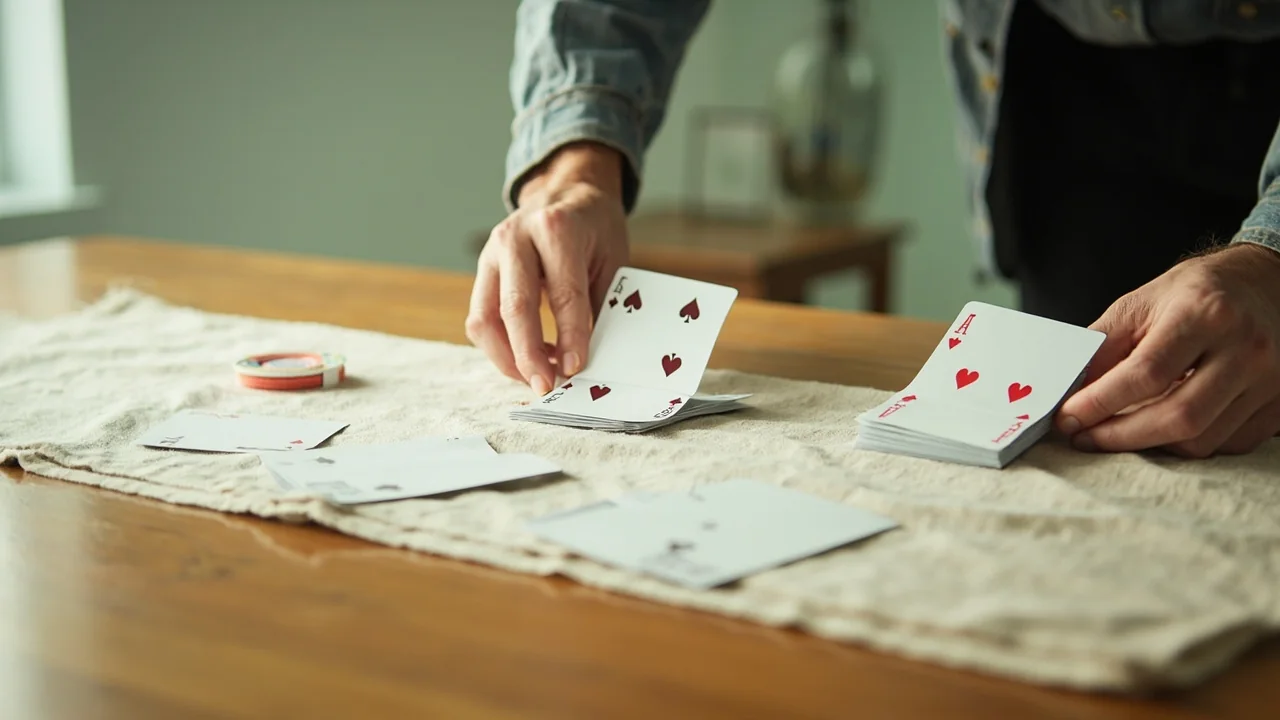
Points rummy is the shortest format on most Indian platforms and the cleanest for a beginner. The table deals one round; each player is paid according to the value of the cards left ungrouped in the losing hands. Convention sets Ace and face cards at 10 points each, number cards at pip value, and the printed joker and wild joker at zero.
The most common mistake at points is to start melding before the pure sequence is locked down. As soon as you lay one grouping down, the rest of the table can see your intent. Wait until the pure sequence is certain, then meld aggressively — there is little time to be subtle in a single-deal format.
Tight discards matter more than catching. A high card discarded to the pile at the wrong moment is the most expensive information leak you can offer across a short evening.
Format in detail · Deals
Deals runs a fixed number of hands — commonly two, three or six — and tracks chips awarded for each winner. A pure-sequence-first style is rewarded because the score compounds: a single lucky declaration in deal three does not offset poor play in deals one and two.
Each deal pays a chip value to the winner (often 1, 2 or a table-defined number). Losing players pay chips equal to their deadwood. At the end of the agreed number of deals the chips are settled; the highest chip count wins the session.
Think of a deals session as two halves: an opening phase where you collect information cheaply, and a closing phase where you commit to a meld pattern. The middle is where readings compound.
Format in detail · Pool
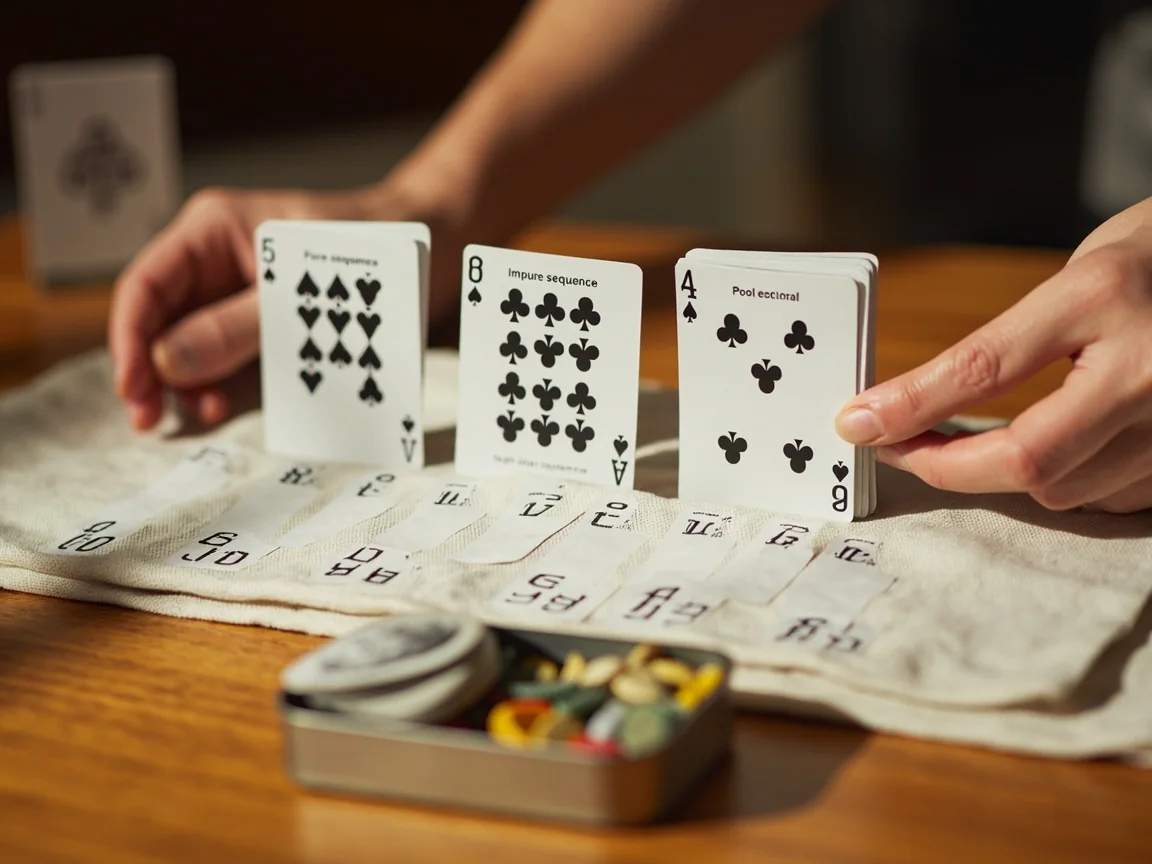
Pool comes in two principal varieties: 101-pool and 201-pool. As soon as a player's cumulative deadwood score across the night crosses the ceiling — 101 or 201 — they are knocked out. The last player remaining at the table collects the bulk of the pool.
Pool is the format most exposed to a player chasing losses back. Set a deposit and loss limit before you start, and remember that an early knockout is a fact of pool — not an opinion about your evening.
Pool rewards patient observation. Players who try to declare early usually bleed points. Players who track discards by suit and rank across the full table save 30–40 points of deadwood in a long session.
Side variants
The default; whatever a casual reader is most likely to encounter. Pure sequence plus any combination of impure sequences and sets to declare.
Hand expands to 21 cards; declaration requires three pure sequences plus three sets, or a single "marriage" pattern combining a sequence and a set of the same rank.
The Western two-player classic. Knocking requires your deadwood to be 10 points or below; undercutting wins the hand outright. Often cited as the cleanest rummy format for skill measurement.
Which format suits which reader
| If you want… | Read this |
|---|---|
| A short evening, minimal bankroll exposure | Points rummy · single deal · highest-deadwood loser pays the table |
| A repeatable test of medium length | Deals rummy · fixed series · cumulative chips |
| A long evening with strict loss limits in place | Pool rummy · elimination at 101 or 201 points |
| An extra layer of tracking and three-of-three declarations | 21-card rummy · three sequences plus three sets, or a marriage |
| A two-player game with no jokers | Gin rummy · knock at 10 or fewer deadwood |
Reader questions about formats
Gin rummy is the cleanest test of skill because jokers are removed. Among Indian formats, deals rummy rewards sustained attention; pool rewards patience; points rewards discipline.
A deal is one hand. A deals-format session is a fixed series of deals — usually two, three or six — with cumulative chips. Pool runs until elimination.
Yes. Pool sessions commonly run an hour or more; deals sessions 20–30 minutes. The extended length is precisely why responsible-play controls matter.
Yes for 13-card and 21-card. Gin rummy does not use jokers at all.
Yes; a middle drop usually costs a fixed penalty (commonly 21 points) and you continue. A first-drop costs less. Dropping too often will, however, drain your score.
Points rummy is commonly two players; deals and pool commonly run two to six. Some platforms allow larger pool tables during peak hours.
Pick a format and read the deal-to-declaration walkthrough that goes with it.